

Luxury Hotels Market Poised to Reach USD 214.46 Billion by 2035 as Personalized Experiences Reshape Hospitality
Luxury Hotels Market
Luxury Hotels Market is evolving through personalized services, wellness, technology, experiential travel, sustainability, and premium hospitality experiences.
Luxury hospitality is evolving beyond accommodation, combining personalized service, wellness, technology, and memorable experiences.”
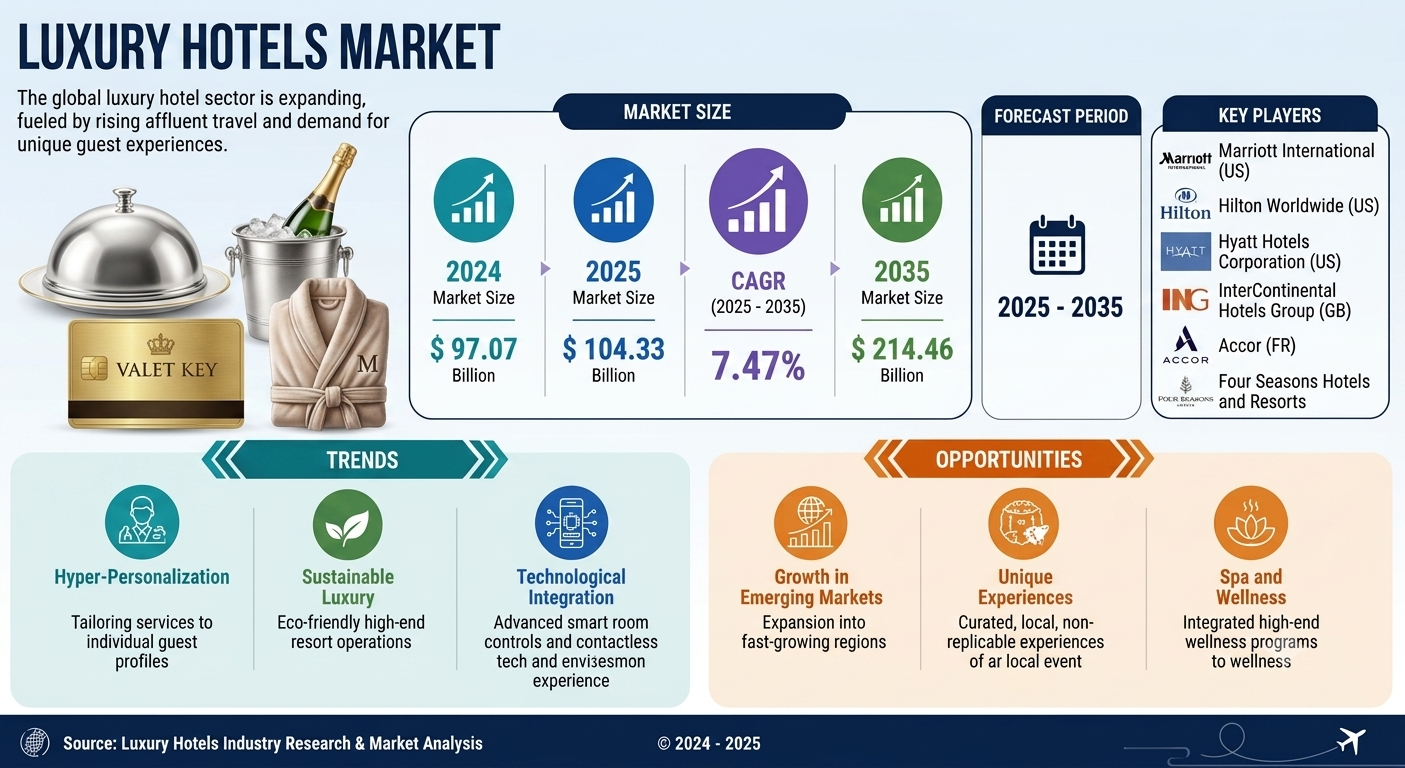
NEW YORK, NY, UNITED STATES, September 1, 2026 /EINPresswire.com/ -- The global Luxury Hotels Market is entering a significant period of expansion as affluent travelers increasingly prioritize distinctive experiences, personalized services, premium amenities, and technology-enabled hospitality. According to the provided market research data, the market is valued at USD 97.07 billion in 2024 and is projected to increase to USD 104.33 billion in 2025, reaching approximately USD 214.46 billion by 2035. This represents a 7.47% CAGR from 2025 to 2035.— Market Research Future (MRFR)
The changing expectations of travelers are encouraging luxury hotel operators to move beyond conventional accommodation models. Guests are increasingly looking for stays that combine comfort with meaningful experiences, individualized services, wellness offerings, culinary excellence, cultural immersion, privacy, and seamless digital interactions. As a result, luxury hospitality companies are investing in new service concepts, upgraded properties, digital platforms, and differentiated guest experiences to strengthen their competitive positions.
Competitive Landscape:
The competitive environment includes several internationally recognized hospitality groups with extensive brand portfolios, global distribution networks, and established customer relationships. The companies identified in the market scope include:
▪️Marriott International
▪️Hilton Worldwide
▪️Hyatt Hotels Corporation
▪️InterContinental Hotels Group
▪️Accor
▪️Four Seasons Hotels and Resorts
▪️Mandarin Oriental Hotel Group
▪️Ritz-Carlton Hotel Company
▪️and Shangri-La Hotels and Resorts.
Large hospitality groups benefit from brand recognition and international reach. Their ability to operate across multiple destinations allows them to serve travelers who value consistency while also offering locally differentiated experiences.
At the same time, luxury hospitality competition is not limited to large multinational operators. Boutique hotels, independent properties, destination resorts, private hospitality concepts, and lifestyle brands are also contributing to the changing competitive landscape.
Differentiation is becoming increasingly important. Hotel companies are exploring new property concepts, culinary experiences, wellness programs, technology platforms, personalized services, and destination partnerships to distinguish their offerings.
Brand reputation remains another important competitive factor. Luxury travelers often place significant value on trust, service consistency, privacy, and quality. Maintaining these characteristics across locations can help established hospitality brands preserve customer loyalty.
Industry Developments:
▪️Hospitality companies are pursuing strategic mergers to expand their property portfolios.
▪️Major hotel groups are strengthening their presence across luxury and leisure destinations.
▪️Acquisitions of premium hotel assets continue to attract investor interest.
▪️Loyalty partnerships are expanding access to luxury properties and experiences.
▪️Strategic collaborations are reshaping the competitive luxury hospitality landscape.
Future Outlook:
The long-term outlook for the Luxury Hotels Market remains promising, with the market expected to increase from USD 104.33 billion in 2025 to USD 214.46 billion by 2035, representing a 7.47% CAGR during 2025–2035. Future development is likely to be influenced by personalized services, technology integration, experiential travel, wellness offerings, sustainability, and premium destination development. As traveler expectations continue to evolve, luxury hotel operators will need to provide distinctive experiences that combine comfort, convenience, exclusivity, and authenticity. Personalization is expected to become increasingly important, with hotels using customer insights and digital platforms to better understand guest preferences and deliver tailored services. Smart technologies can improve booking, communication, room experiences, and overall convenience while helping operators create more seamless guest journeys.
However, technology is unlikely to replace the importance of human interaction in luxury hospitality. Personalized attention, cultural authenticity, discretion, thoughtful service, and emotional connection will remain essential elements of the guest experience. Luxury hotels are also expected to develop into broader lifestyle destinations by integrating fine dining, wellness facilities, entertainment, retail, cultural experiences, and exclusive activities. These offerings can increase guest engagement while creating additional revenue opportunities and strengthening brand loyalty. Sustainability will also remain important as travelers increasingly value responsible operations and environmentally conscious experiences. Overall, successful luxury hotel concepts will likely combine advanced technology with exceptional service, memorable experiences, and strong sustainability practices to meet the expectations of increasingly discerning travelers.
Download Free Sample PDF Copy : – Access A Complimentary Copy of Our Report to Explore Its Content and Insights
https://www.marketresearchfuture.com/sample_request/11116
Challenges:
Despite positive prospects, the luxury hotels market faces challenges including high operating costs, skilled labor shortages, economic uncertainty, and rising competition. Premium properties require significant investment in facilities, technology, maintenance, amenities, and personalized services. Recruiting and retaining trained staff can also be difficult as luxury hospitality depends heavily on service quality. Economic fluctuations, changing travel patterns, currency movements, and consumer confidence can affect demand. Technology adoption creates additional concerns around integration, data management, cybersecurity, and guest privacy. At the same time, increasing competition is pushing hotels to offer more distinctive experiences. Luxury properties must therefore focus on service excellence, personalization, unique design, location, technology, and memorable guest experiences to maintain their competitive position.
Market Segment Insights:
By Customer Demographics:
▪️Affluent individuals remain the largest segment, driven by demand for exclusivity, personalized services, and premium experiences.
▪️Millennials are the fastest-growing group, favoring authentic, sustainable, and experience-focused luxury travel.
By Service Type:
▪️Full-service hotels dominate due to their broad range of premium amenities and services.
▪️Resort hotels are growing rapidly as travelers seek wellness, leisure, recreation, and immersive destination experiences.
By Booking Channel:
▪️Direct bookings lead as hotels focus on stronger customer relationships and loyalty.
▪️Online travel agencies are expanding through convenience, easy comparison, and wider property choices.
By Amenities Offered:
▪️Spa services hold a leading position, supported by rising wellness tourism.
▪️Fine dining restaurants are gaining momentum as culinary experiences become an important part of luxury travel.
By Length of Stay:
▪️Extended stays remain prominent among travelers seeking comfort and premium services for longer visits.
▪️Weekend getaways are gaining popularity as consumers increasingly seek short, experience-rich luxury breaks.
Luxury Hospitality Enters a New Phase of Experience-Led Growth:
Luxury hotels have traditionally competed through premium locations, elegant architecture, high-quality rooms, attentive service, and prestigious brand identities. However, the definition of luxury hospitality is evolving. Modern travelers are increasingly assessing luxury based on how effectively a hotel understands and responds to their individual preferences.
Personalization has therefore become an important strategic consideration across the hospitality sector. Guests may expect accommodation preferences to be remembered, dining recommendations to reflect personal tastes, wellness programs to match individual needs, and hotel services to be accessible through convenient digital channels. Hotels that can combine human interaction with intelligent technology are increasingly positioned to create more memorable experiences.
The growing interest in experience-driven travel is also influencing hotel design. Luxury properties are incorporating distinctive restaurants, private spaces, wellness centers, cultural programming, recreational facilities, and experiential activities. Rather than functioning simply as places to stay, high-end hotels are increasingly becoming destinations in their own right.
This transformation is particularly relevant as international and domestic travelers seek experiences that provide emotional value in addition to physical comfort. Luxury hotel operators are consequently placing greater emphasis on service personalization, exclusivity, convenience, and authenticity.
Market Expansion Supported by Changing Consumer Preferences:
The projected expansion of the Luxury Hotels Market reflects broader changes in consumer behavior. Rising interest in premium travel and experiential tourism is creating opportunities for hotel brands serving customers willing to spend more for differentiated experiences.
Travelers with higher disposable incomes are increasingly interested in customized itineraries, premium accommodations, private services, destination-based experiences, and exclusive amenities. This creates favorable conditions for established luxury hotel companies and new hospitality concepts.
Another important factor is the growing influence of travel research and digital discovery. Consumers can compare destinations, hotel concepts, services, reviews, and experiences before making reservations. This has increased the importance of online brand visibility and reputation for luxury hotel operators.
Social media has further changed how travelers discover premium hospitality experiences. Visually distinctive properties, unique architecture, signature restaurants, wellness facilities, and destination experiences can attract attention well before a potential guest makes a booking. Hotels are therefore increasingly treating digital engagement as an extension of their overall guest experience.
At the same time, repeat customers remain valuable to luxury hospitality companies. Personalized communication and loyalty initiatives can help brands develop stronger relationships with frequent travelers. Understanding guest preferences can allow operators to create more relevant experiences and encourage repeat visits.
Opportunities:
One of the most significant opportunities identified for the Luxury Hotels Market is the integration of personalized technology. Digital systems are becoming increasingly important in areas ranging from booking and check-in to room services and post-stay engagement.
Technology can help hotels organize guest information and use it to create more customized interactions. Digital booking platforms can provide tailored recommendations, while mobile applications can allow guests to request services, manage reservations, communicate with staff, or access hotel facilities.
Smart-room technologies are also changing the guest experience. Connected lighting, climate controls, entertainment systems, digital room access, and voice-enabled services can give guests greater control over their surroundings. When implemented appropriately, these technologies can improve convenience without eliminating the personal service associated with luxury hospitality.
Artificial intelligence and data analytics can further support personalization. Hotels can analyze customer preferences and behavioral patterns to develop more relevant recommendations. For example, information about previous stays may help operators understand preferred room types, dining choices, recreational activities, or service requirements.
However, technology is most effective when it complements rather than replaces human hospitality. Luxury customers often value personal attention, discretion, and genuine interaction. Successful hotel operators will therefore need to find an effective balance between automated convenience and high-touch service.
Wellness and Holistic Hospitality Gain Importance:
Wellness has become an increasingly important component of premium travel. Luxury hotels are expanding beyond conventional spa facilities by offering broader approaches to physical and mental well-being.
Modern wellness programs may include fitness facilities, spa treatments, healthy dining, mindfulness activities, sleep-focused services, recreational programs, and personalized wellness experiences. Some properties are also developing destination-based wellness concepts that integrate local environments and cultural traditions.
The growing focus on wellness reflects a broader shift in consumer priorities. Travelers may view vacations as opportunities to recover from demanding lifestyles, improve their routines, and return home refreshed. Luxury hotels can capitalize on this trend by integrating wellness into the overall guest journey rather than treating it as an isolated service.
Wellness can also help hotels differentiate themselves in competitive destinations. A property with a distinctive wellness concept can appeal to travelers who are specifically seeking health-oriented experiences. This creates opportunities for luxury brands to develop specialized offerings and premium packages.
Sustainability Becomes Part of Modern Luxury:
Environmental responsibility is increasingly influencing expectations across the hospitality industry. Luxury travelers are becoming more aware of sustainability issues, including energy consumption, waste generation, water usage, food sourcing, and environmental preservation.
For luxury hotel operators, sustainability can be incorporated into property design, operations, procurement, and guest experiences. Energy-efficient infrastructure, responsible water management, reduced single-use materials, locally sourced products, and sustainable food programs are examples of approaches that can support environmental objectives.
The relationship between sustainability and luxury is also evolving. In the past, premium hospitality was often associated with abundance and consumption. Today, luxury can increasingly be associated with thoughtful design, authenticity, exclusivity, and responsible resource use.
Hotels located in environmentally sensitive destinations may have additional incentives to adopt sustainable practices. Protecting natural surroundings can help preserve the destination itself, while sustainability-focused experiences may become attractive components of premium travel packages.
Regional Outlook:
North America remains a significant region for luxury hospitality, supported by established tourism infrastructure, premium destinations, major business hubs, and strong demand for high-end accommodations. Luxury hotels benefit from business travel, international tourism, events, and premium leisure trips, while resorts attract travelers seeking complete vacation experiences. Technology adoption is also expanding across reservations, guest communication, room services, and personalized experiences. However, strong competition requires properties to continuously improve service quality, design, and guest engagement. Europe remains attractive due to its cultural heritage, historic cities, culinary traditions, and experiential tourism. Luxury properties can differentiate through heritage architecture, local cuisine, art, wellness, and personalized services. Sustainability is also gaining importance as hotels seek to improve efficiency while preserving historic properties and local character.
Asia-Pacific presents growing opportunities through expanding tourism, urban development, premium travel, and diverse destinations. Major cities, island resorts, cultural centers, and emerging locations are supporting luxury hotel development. Local cuisine, wellness, festivals, nature, and cultural experiences can strengthen regional appeal, while digital services enhance convenience. South America offers potential through cultural attractions, natural landscapes, premium cities, and resort tourism. Meanwhile, the Middle East and Africa benefit from luxury resorts, tourism investment, business travel, safari experiences, and nature-based destinations. Across these regions, combining authentic local experiences with high service standards will remain important for attracting luxury travelers.
Frequently Asked Questions?
1. What is driving the Luxury Hotels Market?
Increasing demand for personalized experiences, premium travel, wellness, experiential tourism, and technology-enabled services is supporting market expansion.
2. What is the projected size of the Luxury Hotels Market by 2035?
The market is projected to reach approximately USD 214.46 billion by 2035, according to the provided market data.
3. How is technology changing luxury hotels?
Technology is enabling personalized booking, digital communication, smart-room functions, customized recommendations, and more convenient access to hotel services.
4. Which regions are covered in the market analysis?
The report covers North America, Europe, Asia-Pacific, South America, and the Middle East and Africa.
Browse More Reports:
High-Fashion Market:
https://www.marketresearchfuture.com/reports/high-fashion-market-14014
Diabetic Footwear Market:
https://www.marketresearchfuture.com/reports/diabetic-footwear-market-41467
Beauty Fridge Market:
https://www.marketresearchfuture.com/reports/beauty-fridge-market-41443
Dining Tables Market:
https://www.marketresearchfuture.com/reports/dining-tables-market-41663
Furniture Home Furnishing Market:
https://www.marketresearchfuture.com/reports/furniture-home-furnishing-market-41744
Market Research Future
Market Research Future
+1 855-661-4441
email us here
Legal Disclaimer:
EIN Presswire provides this news content "as is" without warranty of any kind. We do not accept any responsibility or liability for the accuracy, content, images, videos, licenses, completeness, legality, or reliability of the information contained in this article. If you have any complaints or copyright issues related to this article, kindly contact the author above.
